Why Did Poeple Make Art During the Civil War Why Did People Make Art During the Civil War
/https://tf-cmsv2-smithsonianmag-media.s3.amazonaws.com/filer/20121116040035Homer_Prisoners_From_The_Front-thumb.jpg)
Its battles, its generals, its lasting political implications are all fairly familiar territory to well-nigh, but the Civil War'due south fine art is another story altogether. In the midst of a sesquicentennial anniversary, the country turns over again to that defining moment with exhibitions, books and movies, including the electric current blockbuster film Lincoln by director Steven Spielberg.
Merely it took the dogged determination of curator Eleanor Jones Harvey to bring together a unique exhibit full of original scholarship that tracks how the war was portrayed in art before, during and after and how that war changed forever the very categories of landscape and genre paintings or scenes of everyday life, also equally photography in America. The American Fine art Museum's exhibition "The Civil War and American Fine art" shows how American artists and the broader public wrestled with a war that fractured a land's young identity.
According to Harvey, it has long been assumed that the peachy landscape artists "took a pass" on the Civil War, seeking not to sully their pristine paintings with the problems of the state of war. But, she says, the precise reverse occurred.
Her start clue came while reading the journals of two Texas soldiers who described the scene of a encarmine Amalgamated victory as a metaphorical landscape of wildflowers, covered in cerise. From there, she says, like allusions to weather and landscape were easy to spot in newspapers, poems, sermons and songs. Talk of a coming tempest filled the country's pews and pamphlets in the years leading up to the war.
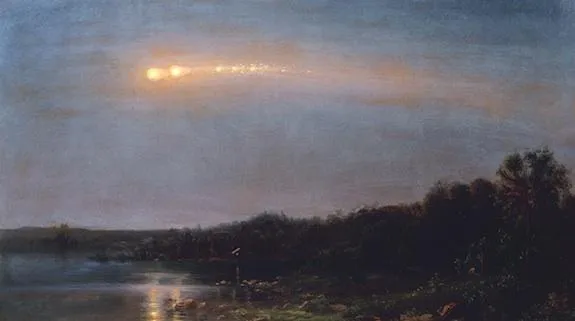
A stunning meteor upshot in 1860 inspired Walt Whitman's "Twelvemonth of Meteors," which referenced both John Dark-brown's raid and Lincoln's presidency. The public could not assist but read the skies for signs of war. Harvey says some even worried that the meteor, which passed equally a procession over Manhattan, might exist a new military machine engineering from the S. She adds that when viewers outset saw the night foreboding skies of Frederic Edwin Church's Meteor of 1860, the anxiety over the pending state of war was writ big.
Storms, celestial events and even volcanic eruptions mixed with religious metaphor informed the chat of the twenty-four hours. "This imagery found its style into landscape painting in a manner that was immediately recognizable to well-nigh viewers," writes Harvey in a recent article. "The most powerful of these works of art were charged with metaphor and layered complication that elevated them to the American equivalent of chiliad manner history paintings."
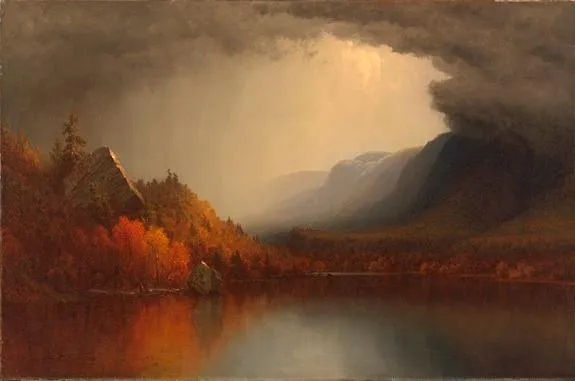
Among the 75 works in the showroom–57 paintings and 18 vintage photographs–grand depictions of battles in the history painting tradition are noticeably absent. "There's no market place for pictures of Americans killing each other," says Harvey. Instead, artists used landscape paintings like Sanford Gifford's A Coming Storm and genre paintings like Eastman Johnson'southward Negro Life at the Southward to come to terms with hardships and heart aches of four years of war.
By drawing on pieces made in the midst of conflict–indeed, many of the artists represented in the show spent time at the battlefront–Harvey says she wanted to address the question "What practise yous paint when yous don't know how the war is going?" In other words, what hereafter did America recall was waiting at the end of the state of war.
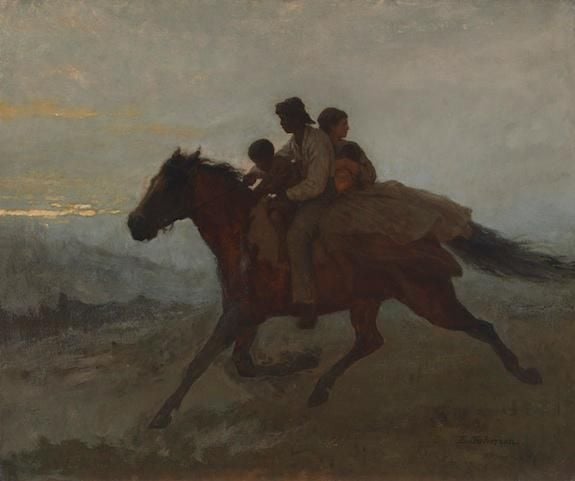
While the exhibit's ballsy landscapes deal in metaphors, the genre paintings wait more directly at the shifting social bureaucracy as people in one case enslaved now negotiated for a lasting liberty in an unyielding society. Johnson's A Ride for Freedom–The Fugitive Slaves, March 2, 1862, for instance, depicts a young family presumably fleeing to freedom. Merely, Harvey points out, Johnson painted this while traveling with Union Full general George McClellan who chose to turn back delinquent slaves. "We want to read these as benign images," says Harvey, but the reality on the footing was anything but.
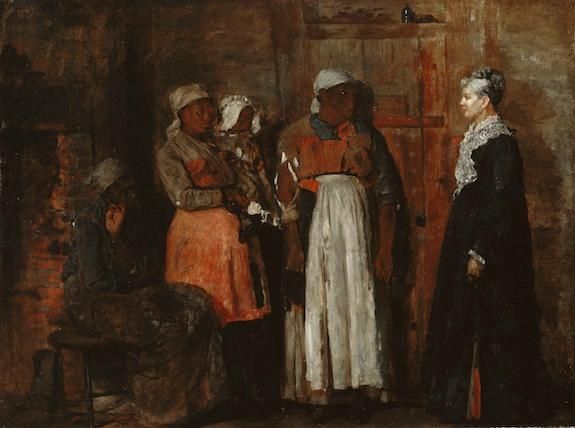
Winslow Homer also spoke to the uncertainties many faced later the war. In his arresting genre painting, A Visit from the Former Mistress, the artist captures a stare-downwardly between a sometime slave owner and the women who were once considered her property. Harvey says she'southward watched visitors to the exhibit head in for a closer expect and get caught in the depicted standoff, stepping dorsum uncomfortably. There is no love shared between the women, no hope for the now-dead myth that perhaps slaves were, in some way, function of the families they served.
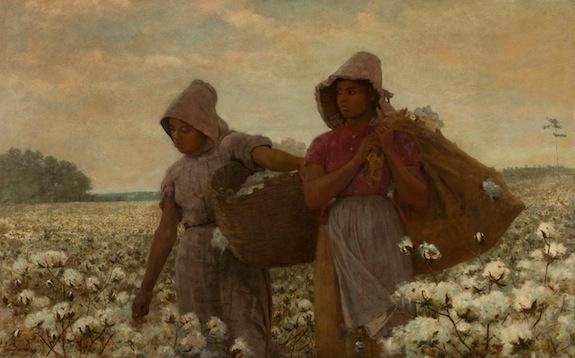
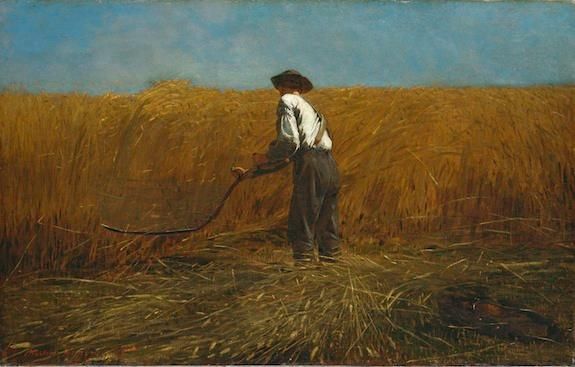
But for the newly freed and others, the fields were still waiting. The Cotton wool Pickers and The Veteran in a New Field, also by Homer, testify the dorsum-breaking labor that notwithstanding characterized life afterwards the war. The alone veteran, for example, has his back to us, his feet buried. "All he can do is proceed scything things downwards," says Harvey.
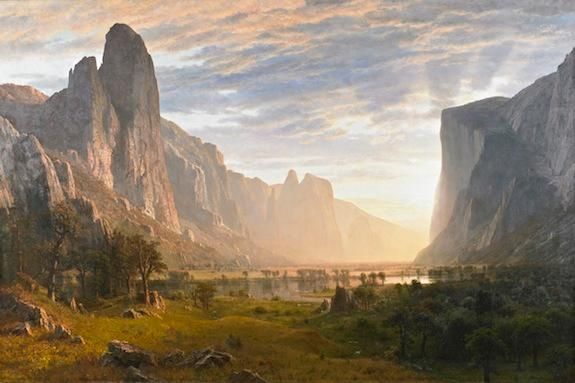
A last gallery of landscapes returns visitors to the metaphors presented earlier. This fourth dimension, artists take up the thought of America as a new Eden and the attempt to once once again find a redemptive narrative in the state. Closing with Albert Bierstadt's Looking Down Yosemite Valley, California, the exhibit ends non in the Due north or South, only gazing West. The failure of Reconstruction was yet to come up. Simply in the West, America hoped it had found some other adventure at Paradise.
Harvey's accomplishment has, in a single exhibit, untied the Civil War from the direct jacket of a rehearsed and certain narrative and returned u.s. to the uncertain precipice of its promise.
"The Civil War and American Fine art" opens November 16 and runs through April 28, 2013 before heading to the Metropolitan Museum of Art in New York City.
Source: https://www.smithsonianmag.com/smithsonian-institution/at-american-art-a-new-look-on-how-artists-recorded-the-civil-war-131916472/
0 Response to "Why Did Poeple Make Art During the Civil War Why Did People Make Art During the Civil War"
إرسال تعليق